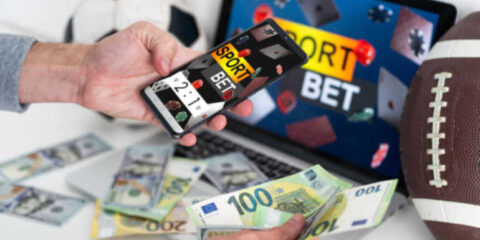

There’s a familiar scene for many beer-loving sports fans, cold drink in hand, big match on the screen, and a betting slip that somehow looks like it was written in another language. A variety of odds, moving numbers, and no understanding of actual value. Similarly, when it comes to beer appreciation, experiences can be daunting when it lacks a clear framing, or when people don’t know what to order or how to evaluate the quality. Even a good list of items doesn’t sound appealing when it’s unclear, and it’s less fun and less about choice, and more about maybe.
Even if you’ve been following sports for years, it can be daunting at first. Lots of fans begin right there. You are having fun, socializing with friends, perhaps even betting a little for an added thrill, but the reason behind the lines remains an unknown. After you develop an understanding of how the odds are calculated at a bookmaker, however, everything falls into place. The gameplay is more interesting, the decision-making is more focused, and finding values is no longer a matter of chance.
The Three Main Odds Formats
The probabilities are presented variously by the bookmakers. After a while, you have no more silly mistakes, and you feel comfortable using them both. The most popular odds (in Europe and Australia) are decimal odds, which are easy for beginners. A team at 2.50 would be profitable by 2.50 times if it wins, meaning that you get back your money plus 2.50 times your stake. Bet $100, and you get $250 total.
Fractional odds (used in the UK) indicate the profit according to stake. 3/1 means that you make a profit of $3 for each $1 you stake. 3/2 is the same decimal as 2.50. American odds (moneyline) are divided into favourites and underdogs. If you bet $150 and win $100, then it is called a negative number, as in -150, which means that you must bet $150 to win $100. Numbers with a + sign are positive numbers, meaning that a $100 wager in this case would make you a $200 profit.
Here’s the same outcome shown in all three formats:
| Outcome Probability | Decimal | Fractional | American |
| 50% chance | 2.00 | 1/1 | +100 |
| 33.3% chance | 3.00 | 2/1 | +200 |
| 66.7% chance | 1.50 | 1/2 | -200 |
Pick whichever format your book defaults to and learn to convert the others in your head. It takes a week of practice and saves a lot of confusion later.
How Bookmakers Build in Their Edge
The raw probability never adds up to 100%. That’s the bookmaker’s margin, often called the vig or juice. Take a simple coin flip between two evenly matched teams. Fair odds should be 2.00 on each side. But the book might list them at 1.91 each. Add those implied probabilities together, and you get around 104-105%. That extra 4-5% is their built-in profit over time.
Calculating Implied Probability
This is the part most casual bettors skip, and it’s exactly why they lose long-term.
For decimal odds: Implied probability = (1 / decimal odds) × 100.
Example: A team sits at 1.80.
1 ÷ 1.80 = 0.555 → 55.5% implied probability.
If you think the true chance is closer to 60%, that line has value. You’ve found an edge.
For American odds, it takes one extra step. For favorites (-150): 150 / (150 + 100) = 60%. For underdogs (+200): 100 / (200 + 100) = 33.3%.
Spotting Value in Real Time: A Practical Scenario
Last month, I was looking at a big NBA matchup – Lakers versus Warriors. One site had the Warriors at +145 (American). Another had them at +160. I converted both quickly. +145 equals roughly 40.8% implied probability. +160 equals 38.5%. My own quick model, based on recent form, rest days, and injury news, put Golden State’s real win probability at 44%. That 160 line suddenly looked juicy.
I ran the numbers on expected value. Over 100 bets of $100 each at +160 with a true 44% win rate, you’d expect to be up around $1,040 after accounting for the wins and losses. At +145, you’d only be up about $440. That difference compounds fast. This is exactly where I opened JB.COM sports betting to compare lines across their markets. They showed the better price on the Warriors, plus the live stats I needed to feel confident pulling the trigger.
Breaking Down a Bet Slip Step by Step
You see a soccer match with Team A at 2.40 decimal.
Step 1: Calculate implied probability → 1 ÷ 2.40 = 41.67%.
Step 2: Decide your own estimated probability. Let’s say your research puts them at 48%.
Step 3: Calculate expected value (EV).
EV = (Your probability × Decimal payout) – 1
EV = (0.48 × 2.40) – 1 = +0.152 or +15.2%
A positive EV bet is what you’re hunting. Even if you lose this specific wager, repeating positive EV bets over hundreds of games puts the odds in your favor.
Common Mistakes That Kill Your Edge
These mistakes show up in almost every losing bettor’s history. None of them is complicated; they’re just easy to ignore when you’re caught up in the moment. The math doesn’t care how confident you feel about a pick.
- Betting the favorite just because they “look strong” without checking the price.
- Ignoring the margin on parlays, it multiplies fast.
- Chasing big underdogs without calculating true probability.
- Not shopping lines. The difference between two books can easily be 5-10 cents on the dollar.
Line shopping alone, just checking two or three books before placing, is the simplest fix on that list. Most people skip it because it takes an extra two minutes. Over a full season, that laziness costs more than any single bad beat. The parlay problem is underrated. A two-leg parlay at fair odds already carries roughly 8-10% house edge built in. Add a third leg, and you’re fighting a 12-15% margin before the games even start. Books love parlays for a reason, and it’s not because they’re generous.
Chasing underdogs without doing the probability work is the same mistake in reverse. A +300 line looks exciting until you realize the book’s implied probability is 25% and your honest assessment is closer to 20%. That’s not worth it. That’s just a long shot dressed up as one. In beer culture, this same instinct is seen when people are able to tell the difference between a lackluster product and one that is well done, but based more on branding or hype than actual flavor. As time passes, practice and experience improve judgment and help the individual to realize what satisfies and what doesn’t after the initial shock wears off.
JB Sports Betting Tools That Actually Help
Stats and line data in the same view sounds like a small thing until you’ve lost a good price because you were switching between three tabs. On JB.COM sports betting, live probability shifts, head-to-head records, recent form, and injury updates sit right next to the odds. When you’re betting in-play with thirty seconds to decide, that context is the difference between a confident call and a guess. Line speed is the other thing. I’ve missed prices on other apps because the line updated thirty seconds after the real-world event.
The revised number is at your fingertips in a flash after the JB sports betting move, a starter pulled too early, a red card, a momentum change, whatever. It’s just a little bit of convenience for people who play gambling games for fun. It is no longer an option to consider for serious in-play work. If you are new to JB sports gambling, you should check out these prepackaged stats panels before you put any money into the book. You’ll get a lot of information from how a line has performed over the past hour, for instance.
What Separates Recreational Bettors from Consistent Winners
Most people bet for fun and treat math like optional homework. They pick teams they like, bet their favorite numbers, and complain when the book “screws them.” The ones who stick around and actually make money long-term do the boring work. They track their bets. They learn basic probability. They compare lines across a couple of sites before committing. They accept that even the best edges only win around 52-55% of the time. Sports betting JB.COM gives you the tools.
The edge only appears when you know how to read the numbers properly. Learning this stuff won’t make you rich overnight. It probably won’t even make you profitable in the first few months while you’re still figuring things out. However, it makes betting a more structured affair, and small, quantifiable advantages begin to take significance. This same evolution is seen in the beer culture when someone once just drinks a beer to quench thirst and moves on to understanding the details of the list of beers, their balance and craftsmanship, and so on.