


Peaks & Pints invites you to explore the Baltic region’s unique style of beer
“January asks for gravity. For darkness with manners. For beer that knows how to carry its weight without clanging around the room,” said the announcement from Peaks & Pints, an outstanding beer bar and bottleshop in Tacoma. “Baltic Porter Day arrives right on cue, and Peaks & Pints is giving it the full, all-day treatment.”
Need to learn more about Baltic porter? See the info below. Can’t make it to Tacoma? The Good Society Brewery in West Seattle is currently pouring its Baltic porter. It is delicious.
On Saturday, January 17th, Peaks & Pints pays special attention to this somewhat rare beer style. It is, after all, International Baltic Porter Day. (Who knew? Now you do.) They’ll tap into a bunch of Baltic porters, offering a couple of different ways for you to experience the style. Get a full pour or order a taster flight.
“Expect Baltic porters on tap, including the Baltic Porter Day Baltic Porter from Põhjala, brewed with that unmistakable Baltic Sea confidence — smooth, deep, quietly formidable. We’ll also pour a curated Baltic Porter flight designed to show the style’s many moods: layered malt, dark fruit echoes, polished roast, and that signature silky glide that sets Baltic porter apart from its imperial stout cousins.”














It’s not just a porter from the Baltic, it is its own style
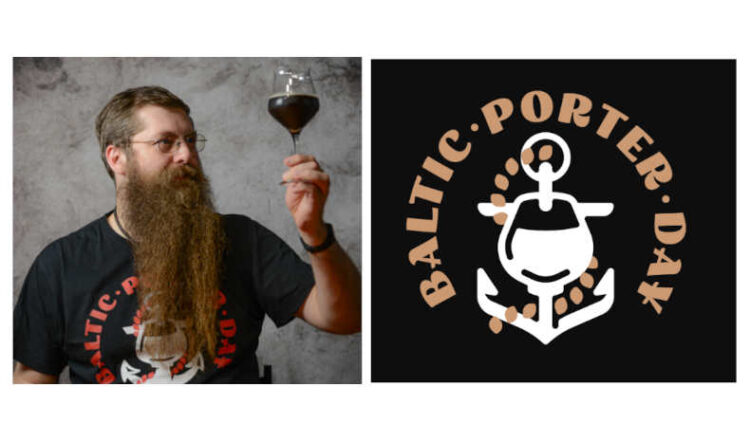
Baltic porter ranks among my personal favorite styles. If you are not yet familiar, I’d recommend giving it a try next time you encounter a Baltic porter on a beer menu. That will happen if you go to Peaks & Pints on Saturday, January 17th.
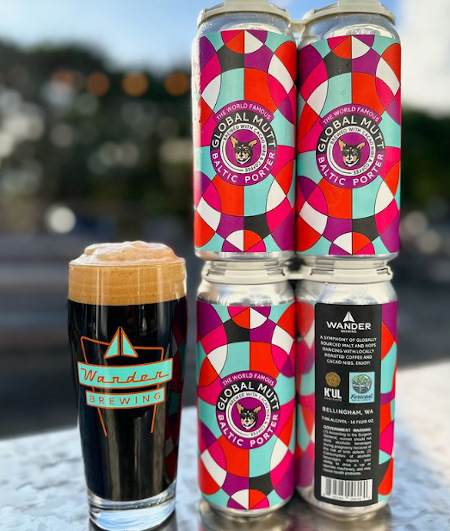
On the most basic level, it fits somewhere between a porter and an imperial stout. Sort of, but not really. Baltic porter is dark, strong, and, when properly executed, delicious. Here are some key points about Baltic porter, followed by a deeper dive into the history and nature of the style.
- Unlike its English forefather and counterpart, Baltic porter is not an ale. It is fermented using lager yeast at lower temperatures. Like most lager-style beers, it is typically allowed more time to condition.
- The malt bill is like that of a stout or a porter, so it is dark like those styles. Often, it is less opaque than an English-style porter and more closely resembles a doppelbock—very dark, nearly opaque brown. SRM ranging broadly from 17 to 30.
- In terms of alcohol strength, Baltic porters typically clock in around 8 percent ABV, though ABV can vary quite a bit. Some folks might refer to it as an imperial porter, and that is generally okay, but Baltic porter is officially recognized as its own, unique style.
- According to the official BJCP style guidelines, the aroma features “Rich malty sweetness often containing caramel, toffee, nutty to deep toast, and/or licorice notes.”
- The flavor, according to the same style guidelines, features “rich malty sweetness with a complex blend of deep malt, dried fruit esters, and alcohol. Has a prominent yet smooth schwarzbier-like roasted flavor that stops short of burnt. Mouth-filling and very smooth. Clean lager character. Starts sweet, but darker malt flavors quickly dominate and persist through the finish. Just a touch dry with a hint of roast coffee or licorice in the finish.”
- The term Baltic refers to the region where the style was developed and gained popularity — Poland, Estonia, Finland, and other countries.
- The term Baltic porter refers to beers of this style, not to the place where they were produced. Not all Baltic-brewed porters are Baltic porters. Historically, and to this day, some brewers in the region brew English-style porter.
- The style has been around for a couple of hundred years, but the actual term ‘Baltic porter’ didn’t appear in publication until the 1990s. Learn more about the subtle differences between porter and stout and discover how Baltic Porter brings a unique twist to both.
The history of Baltic porter
Back in the late 1700s, Porter (double brown stout, in the vernacular of the day) was a very popular style around London. It became a popular export, reaching Poland and other parts of the Baltic Sea region. Brewers in that region brewed beers that reflected the popular English style.
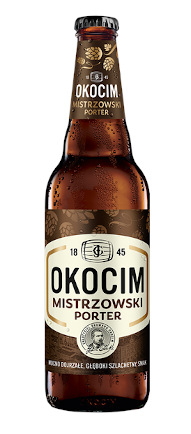
Political turmoil in the early 19th century disrupted the flow of beer from England to the Baltic region, so Baltic brewers began brewing their own double brown stout. Because of the region’s colder temperatures and their impact on the brewing process, some of the more notable Polish breweries turned to lager yeast, which ferments at lower temperatures. Independent of the Napoleonic wars’ impact on the region, brewing lager-style beers was gaining popularity at the time. The resulting beer, a new style of double brown stout, was both different and the same.
Imported English porter returned in the mid-1800s, but by then the region’s brewers, especially in Warsaw, had established their own version. Some brewers continued to model their versions on the English style, but the new lager-fermented version gained popularity.

And thus, a whole new style of beer was born: a version of Porter that was fundamentally the same but also fundamentally different. Michael Jackson, perhaps the most influential beer writer of the 20th Century, is credited with coining the term Baltic porter, though he didn’t use the term in his own works. The first time ‘Baltic porter’ appeared in print was in 1994, in Bill Yeene’s book Beers of the World.
Today, it’s simple. When American craft brewers call a beer a Baltic porter, it is a strong, dark, Porter-like beer fermented like a lager. It is fermented at a lower temperature and often left to condition for a longer period. I’ve had some that lean toward the sticky-sweet end of the flavor spectrum and others that are nearly bone-dry. To my taste, the best Baltic porters hit you with a cornucopia of malty flavors and then dry out on the finish, inviting you to re-whet your whistle.
Visit our events page and calendar to learn about all sorts of other upcoming beer events. To submit an event for inclusion on our events calendar, use our event submission form. Got more details to share, reach out to us.