

It’s no arbitrary decision. There’s a reason an AVA is an AVA
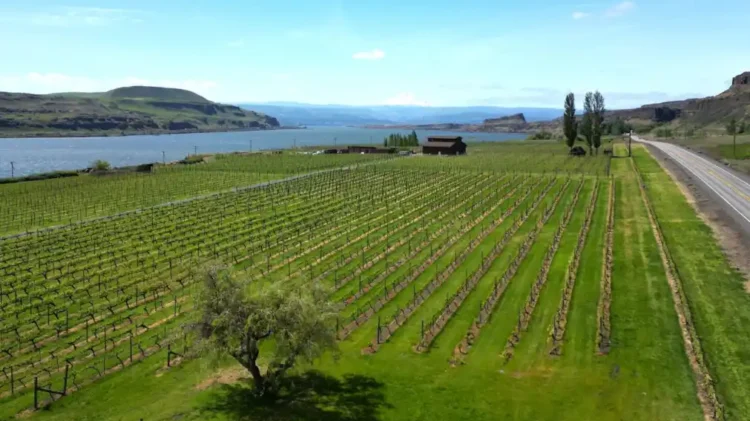
Washington’s wine map just got a little more crowded — in a good way. On August 17, 2026, the Alcohol and Tobacco Tax and Trade Bureau made it official: Columbia Hills is the state’s 22nd American Viticultural Area (AVA), a designation that gives this stretch of vineyards along the Columbia River its own name on the label. In very basic terms, the new AVA is located, more or less, across the river from The Dalles, Oregon. The photo above is by Cascade Cliffs Vineyard and Winery, which lies within the new AVA.
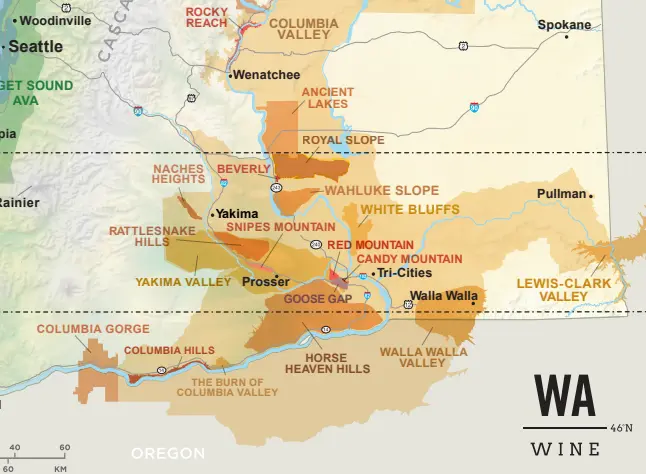
If you’re picturing another sprawling appellation, think smaller and more specific. Not so wee as Candy Mountain, the state’s smallest AVA, but not at all expansive. Columbia Hills covers 29,387 acres, tucked between two other AVAs: the Columbia Gorge to the west and The Burn of Columbia Valley to the east. It sits entirely within the larger Columbia Valley AVA. Right now, Columbia Hills is home to roughly 300 acres of wine grapes, making it one of Washington’s more intimate designations.
Columbia Hills is unique because of science
The appellation takes its name from a 35-mile ridgeline running along the north side of the Columbia River, which forms its southern edge. The northern boundary is drawn at the 1,050-foot elevation line, and that number is not arbitrary. It is significant.








Kevin Pogue, a geology professor at Whitman College who authored the AVA petition, explained that this elevation line marks the highest level the ancient Missoula Floods reached in this part of the state. That flood history is written into the soil: thin, wind-deposited silt and sand sitting on top of flood-scoured basalt bedrock. Pogue described it as a scenic stretch of terrain, with vineyards perched on terraces the floods carved above the river. Geology is so cool!
What sets Columbia Hills apart
The TTB doesn’t dish out AVA status for scenery alone — a region has to show genuinely distinguishing features. Columbia Hills makes its case on four fronts:
- South-facing slopes. The entire appellation sits on southern exposure, prime real estate for sun-loving wine grapes. Flood erosion left a series of stepped terraces on those slopes, widely regarded as among the best vineyard sites around.
- A river running through it. The appellation sees warmer temperatures during the growing season, especially in the early morning hours. But with most of the AVA lying within a mile of the Columbia River, temperatures — especially overnight and early in the morning — are moderated, stretching out the growing season.
- Lower ground. Elevations here range from just 74 feet to 1,050 feet, notably lower than much of the rest of the Columbia Valley AVA, within which Columbia Hills and most other Washington AVAs lie.
- Thin, well-drained soil. Shallow soils let vine roots reach down into the basalt bedrock beneath — something you don’t see much of elsewhere in the Columbia Valley. Combined with coarser soil texture, drainage here is excellent.
The grapes appreciate a view of the river
Happy grapes make happy wine. Robert Lorkowski, who owns Cascade Cliffs Vineyard and Winery within the new appellation, put it in more personal terms. He described the region as a patchwork of small, intimate microclimates shaped by their closeness to the water, and pointed to a line he’s fond of: “All the great grapes see the river.” Whether there’s hard data behind that, Lorkowski admits he can’t say — but he’s convinced there’s something real in vines grown within sight of the Columbia.
What it means for wineries and drinkers
The designation isn’t just symbolic. Starting September 16, 2026, wineries will be able to submit Certificate of Label Approval (COLA) requests to the TTB to list Columbia Hills as the official appellation of origin on their labels. That’s the moment this becomes more than a line on a map — it starts showing up on bottles.
For a state that already boasts 21 other AVAs, adding a 22nd might not sound like huge news. But Columbia Hills is a reminder of how much local variation is packed into Washington wine country — river-warmed, flood-carved, basalt-rooted variation that’s now got a name of its own. Keep an eye out for it on shelves once those first labels start rolling out this fall.
Want us to share your news here on the Washington Beer Blog? Click here to learn how to reach us.