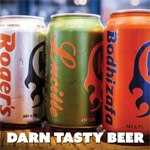
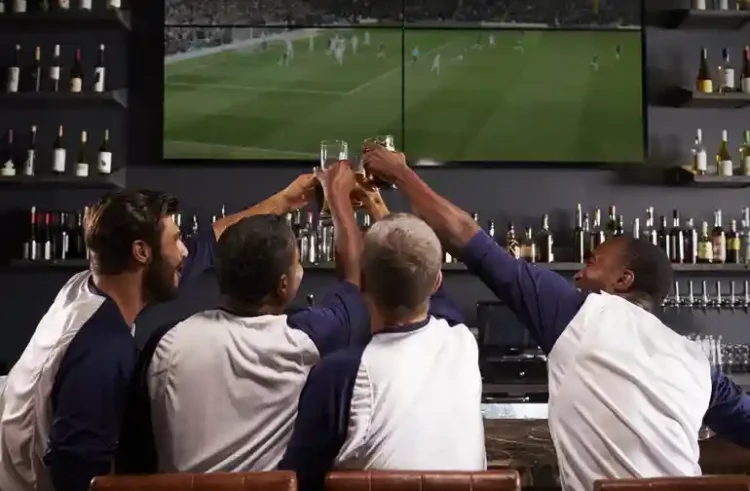
Craft beer’s next growth idea is not another hazy IPA. It’s a reason to move back to watch it again next Thursday, and to chat along with. This year, production by domestic craft brewers plunged 4% to 22.034 million barrels as the number of craft breweries operating in the United States shrank to 9,578, the Brewers Association reported. Despite beer consumption shrinking, taproom production decreased by 3.9%, while hospitality-related models were comparatively constant.
That tension is responsible for the proliferation of cornhole, tabletop leagues, watch parties, run clubs, and all the other details of trivia: drink comes first, activity comes second. For the breweries and the taprooms, these periodic events can become an extended social norm that provides a positive reason for people to return even after sampling a pint. A tasting flight is so easy to emulate; a good weekly ritual is not so easy to replace.
A 4% Drop Changed the Brief
Craft beer held 13.4% of U.S. beer volume in 2025 and generated an estimated $28.0 billion in retail value. Those figures still describe a substantial category, but falling production changes what a taproom must deliver. This is why experience-driven programming matters economically. It can spread arrivals across a quieter evening, give groups a reason to reserve a table, and introduce a brewery’s range without turning every interaction into a sales pitch. The event has to stand on its own; however, weak entertainment merely makes an empty room louder.
Good Competition Has a Short Rulebook
A social game should be understandable before the first round begins. Trivia works because teams can divide knowledge; cornhole works because the scoring is visible; a blind tasting works because the sensory task belongs to the venue. Long explanations and complicated brackets punish newcomers.
Three design choices usually improve the night:
- Keep rounds short enough for late arrivals to join the next one;
- Publish scoring and tie-break rules before play starts;
- Reward recognition or small merchandise, not aggressive drinking.
Team formats also soften the room. A hesitant guest can contribute one answer without becoming the center of attention, while regulars gain a reason to invite someone new.
The Flight Needs Math, Not Guesswork
Sample size and ABV matter more than the word “flight.” A standard drink’s alcohol content is defined as 0.6 fluid ounces of pure alcohol in the U.S. A 12-ounce beer with 5% alcohol by volume is considered around one standard drink. Although appearances can be deceptive, four 5oz. (140ml) Drinks of 8% ABV are the equivalent of around 2.7 standard drinks, albeit on a wooden paddle.
For size and ABV should be listed on the menus, and water, meals, and alcohol-free items should be included on the menu and offered as part of the menu. Competitive rounds are more successful if paced. Nobody produces a sharper trivia answer because the next pour arrived early.
Digital Play Belongs on a Separate Tab
Digital entertainment often continues after a taproom event, but the product checks are different. A polished lobby says little about licensing, withdrawal rules, data handling, or the fairness information attached to individual games. Anyone reviewing a legit online casino should verify the operator’s legal status for their location, read KYC and payment terms, and set a spending limit before playing. That assessment should remain separate from beer promotions, since alcohol can weaken the very judgment those checks require. The useful connection is social culture, not a bundle that turns drinks into wagering incentives. Esports watch parties can translate naturally to a large screen because the audience already understands maps, rounds, and momentum.
Betting adds another data layer: pre-match prices reflect available information, while live odds react to score state, lineups, and market activity. A guest who uses esports betting should compare the market’s settlement rules and data delay before placing a stake, not rely on the mood of the room. The brewery’s role is to host the broadcast and keep the event welcoming, not to imply that a crowd favorite has better mathematical value. Clear separation also protects the casual atmosphere when a result turns. Demo play offers a cleaner bridge between social games and casino mechanics because no stake is needed to learn the interface. Card symbols and cascading wins can make a slot look familiar even when the probability model remains opaque.
Testing the Super Ace demo lets a reader inspect its combo multipliers, feature triggers, and paytable before deciding even if the format is enjoyable. A demo cannot prove a strategy, predict the next spin, or test withdrawals; random outcomes and long-run RTP do not become controllable with practice. Its practical value is literacy, not forecasting. In a beer-focused setting, that same principle keeps entertainment in perspective: a brewery visit can create a relaxed social backdrop for exploring different activities, but each game should remain separate from the experience of tasting a new pour or spending time with friends. Understanding the limits of a demo helps keep the evening grounded in what it can actually offer.
The Host Sets the Temperature
The host is part referee, part traffic controller. Good pacing leaves room for conversation, announces the next round clearly, and settles disputes without turning them into theater. Sound levels matter too: a microphone should carry instructions, not erase the table talk that brought people out. Accessibility belongs in the same plan. Printed questions, visible scoreboards, seated alternatives to physical games, and an alcohol-free menu widen participation with little disruption. Friendly competition succeeds when guests can choose how intensely to join.
Measure the Return Visit, Not Just the Bar Tab
One busy night can hide a weak format. Breweries should compare repeat attendance, reservations, event-night labor, average visit duration, and sales mix over several weeks. Comment cards or a two-question QR survey can reveal what brought guests through the taproom door: the host, the game, a new beer release, or the people they met.
The deciding signal is behavioral: do teams return without another discount? If they do, the event has become part of the brewery’s identity rather than a temporary promotion. That kind of repeat attendance can also show that the taproom is building loyalty around the experience, much like how a bar taps into a trend by responding to what customers genuinely want, with the beer naturally remaining part of the reason people come back.