
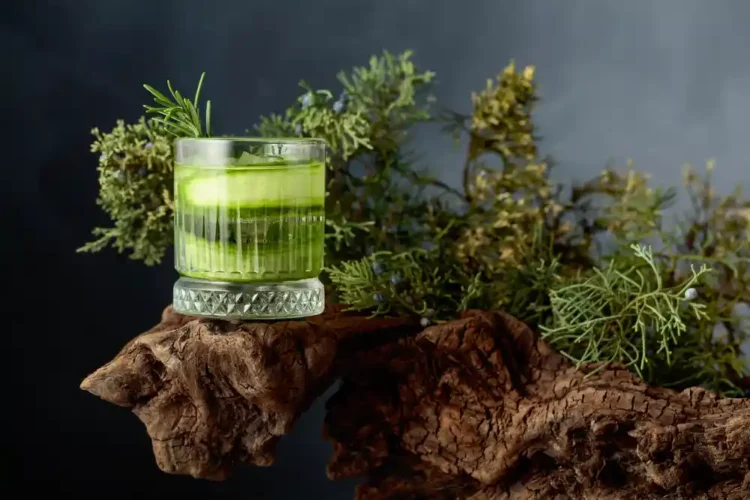
The traditional London Dry can be a seemingly simple beverage. Juniper first, followed by resinous pine-like notes and a coolness and woodiness to the edge. Wait a bit, however, and more will emerge. Warmer botanicals add earthiness or pepperiness, citrus helps to lift the top of the aroma, coriander provides spice and a sharper freshness, and roots provide dryness and body. Anyone who loves to tease out the notes in a craft beer will know the joy of this gradual unveiling, the care put into what finally gets put in the glass. Making brews and making distillates both demonstrate that individual elements of the botanical and flavour profiles can create a uniquely pleasant sensory experience without disturbing the overall balance.
This is the main idea. London Dry is not a product that has a tonne of botanicals in it. It’s about creating the profile on juniper, and making the rest of it a supporting cast.
What Makes It a London Dry?
Although it’s called London Dry, it doesn’t need to be distilled in London! The term refers to the method of preparation and not to the location.
London gin: Under European rules, which call for the distilling of agricultural ethyl alcohol and natural plant material for flavour. The distillate is then diluted to a minimum of 70% alcohol by volume. Colouring is not allowed in the final spirit, nor is sweetening allowed, except in very limited amounts and under strict supervision.
The rest is just technical jargon, but the principle is simple: Gin is from juniper. The standard specifies that its flavour shall dominate over the other botanicals even if they are added.
A London Dry might be citrus, might be more spice-forward, or might be really earthy, but the style must remain recognisable. Juniper comes first.
Juniper Sets the Foundation
Juniper berries give gin its forest-like character. Depending on the berries and the way they are distilled, their aroma can suggest pine needles, resin, wood, herbs, citrus peel, or a faint pepperiness.
This isn’t simply tradition. The berries hold volatile compounds that contribute significantly to gin’s aroma and shape what you perceive in the glass.
Research into gin aroma has pinpointed terpenes and related compounds as key components of the finished spirit. Studies of commercial gins also show that changing the
botanical recipe shifts the concentration of aroma-active compounds, which in turn alters the sensory character of the drink.
For a classic London Dry, the distiller therefore has to preserve enough juniper character for it to stay clearly identifiable after dilution and when the gin is mixed.
Supporting Botanicals Have Distinct Roles
Recipes differ from one producer to the next, but a handful of ingredients turn up again and again because each does a clear job within the blend.
| Botanical | Typical Contribution | Role in the Blend |
| Juniper | Pine, resin, herbs, light citrus | Defines the spirit and provides its core |
| Coriander seed | Citrus, spice, pepper | Connects juniper with brighter notes |
| Lemon or orange peel | Fresh citrus oils | Adds lift and aromatic freshness |
| Angelica root | Earthy, dry, woody | Provides depth and structure |
| Orris root | Earthy, floral, restrained | Supports the overall botanical blend |
| Cardamom | Aromatic spice, freshness | Adds complexity in small amounts |
| Cassia or cinnamon | Warm spice | Adds depth |
A recipe doesn’t need to include every one of these. Too many botanicals can blur the profile and leave the drinker unsure what to notice first. A good London Dry tends to feel focused rather than crowded.
Coriander Matters More Than It May Seem
Coriander seed is not as well known as juniper but often does a lot to support.
It has a peppery spice flavor with a clean, fresh, almost citrus flavor, making it a versatile link between other botanicals. Lemon or orange peel may be sharp and light; juniper resin may be resinous and heavy. Coriander makes them meet.
Coriander is a prominent aromatic ingredient in gin, highlighted by sensory research frequently alongside juniper. The study of volatile compounds also reveals that many of the classic gin’s aromas can be traced back to juniper, coriander, and other common botanicals, illustrating how the interplay and combination between these botanicals influence the overall flavour and style of the gin.
However, an excessive quantity of coriander can lead to a spicy profile. It’s the balancing act that’s difficult.
Citrus Lifts the Spirit Without Dominating It
Typically, citrus peel is added to accent a spirit, rather than make it a flavoured one. If you want a crisp finish, you can use lemon peel, or orange peel might have a rounder, slightly sweeter aroma, even with a dry spirit. Some recipes require both of these ingredients.
Citrus peel oils are highly aromatic, so changes to them will be noticeable in the smell of the gin.
It’s particularly noticeable when served on its own. Citrus can be the first note to emerge in a classic gin with tonic or soda before the deeper root and spice notes.
Roots Provide Structure
Angelica and orris root are rarely referenced, but are part of the dry, structured style that many London Dry recipes follow. Angelica can add earthy/woody and slightly herbal flavors. Orris tends to be more restrained in character, with an earthy character and possibly a perfume of light floral notes.
Botanicals should not be aggressive; they serve more of a supporting role. Unless the notes are more concentrated, a gin that is made of juniper, coriander, and citrus may become too overpowering with its high and aromatic overtones. The roots give a more bass and soulful sound.
Small Amounts of Spice Can Change the Whole Profile
Aromatic botanicals such as cardamom, cassia, liquorice, anise and more can all be used in a gin recipe, each with a unique aromatic character. Looking at dry gin profiles shows how these ingredients interact, and why restraint matters so much when building a balanced spirit.
Some cardamom brings aromatic freshness, and too much can completely change the character of the spirit. Cassia adds a mild heat, but will stand out if overused! The distiller is essentially a layer:
- juniper establishes the core identity;
- coriander connects resinous and citrus notes;
- citrus adds lift;
- roots provide earthy structure;
- spices contribute smaller accents.
The quantities used, the extraction method, and the distillation conditions all influence how clearly each layer comes through.
More Botanicals Do Not Always Mean More Complexity
Having twenty botanicals in a recipe sounds more impressive than six, so it’s tempting to think that the recipe is more complex. Research indicates otherwise, however, according to the Aroma. Complexity can be obtained from the interaction of the different volatile compounds; it is not the number of ingredients put in that can provide complexity.
When there is a purpose for each of the ingredients, a shorter list can be just as good for creating real depth. It is particularly so in the case of London Dry, where clarity plays a major role in the style. The same sense of balance is observed in London lager, where a clear palate is given to the individual taste.
The characteristics stand out but don’t overwhelm each other. Juniper shouldn’t go under florally, fruity or spicy notes; it should be easy to see.
Juniper Leads, the Other Botanicals Support It
Clear hierarchies of roles are essential for many memorable London Dry gins. Juniper lays the foundation. Coriander brings spice and energy. The roots add earthy depth, and the citrus adds freshness to the top of the aroma. The gaps around the edges are then filled with spices.
There is no universal formula that fits all bottles. Distillers can tweak the recipe, use different plantings, and play with techniques and methods without straying from the style.
The flexibility also relates to craft brewing, where the ingredients and methods are adjusted to create unique flavors and maintain the integrity of a specific beer style. Other local creatives like Ferments & Botanicals demonstrate how botanical ingredients can be involved in the creation of unique drinks. Nevertheless, one rule has been set: no matter how expressive the other botanicals become, juniper should always come first.