

Meet HBC 1134, the hop that might save your favorite pilsner from extinction
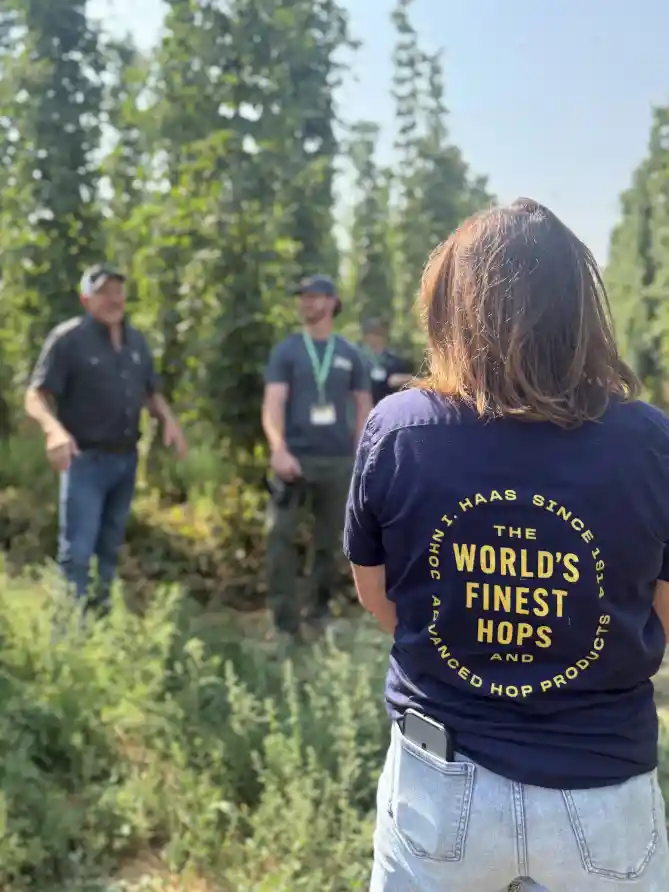
It’s not wasted on me. My job as a beer writer could pay better, but the perks are great. I recently spent a day with some of the greatest hop minds on the planet: farmers, scientists, sensory analysts, and brewers. John I. Haas (the company, not the man) invited me over to Yakima to tour one of its farms, its processing facilities, and (don’t hate me) its Innovations Brewery, where the brew crew creates beers using hops that you’ve never heard of, and some that you’ll never hear of. No photos. Keep your phone in your pocket, etc. That experience, in part, spawned my interest in this new hop and also drove me to share what I know with you.
Here’s a problem most Americans probably haven’t thought much about: the classic European hops that give traditional pilsners and other lagers their delicate, earthy, floral character are having a rough go of it lately. It’s not just a drought, but Europe might be going dry. Full stop.
Long-revered hop varieties like Saaz, Hallertauer Mittelfrüh, Tettnanger, and Spalt — the backbone of “Noble” hop character for centuries — are increasingly vulnerable to heat waves, drought, and disease pressure hitting Europe’s traditional growing regions. Add in rising shipping costs and unpredictable tariffs on top of that, and breweries in the U.S. and elsewhere have reason to worry.









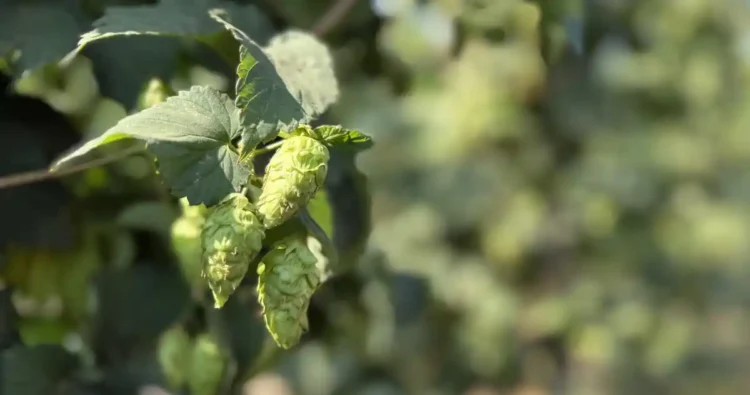
The situation has not gone unnoticed by the people who can do something about it. Domestic hop breeders have been quietly working on a fix, and one of the more promising results goes by the name HBC 1134. That is the name currently used for one of the experimental hop varieties bred to provide a viable substitute to those Noble hops. HBC 1134 has been in development for several years. Some lucky brewers have already used it, in limited supply. Next step, if things continue to go well, it will receive a sexy, memorable name and become more readily available.
Know the players. Hop Breeding Company (HBC) is a joint effort involving Haas and YCR. John I. Haas is the American arm of the BarthHaas Group, the world’s largest supplier of hops. Yakima Chief Ranches (YCR) is closely related to Yakima Chief Hops (YCH). YCR focuses on agricultural research and innovation, while YCH is the world’s second-largest hop supplier.
Bred by the Hop Breeding Company, HBC 1134 is essentially an American-grown answer to the Noble hop problem. It’s a direct daughter of Hersbrucker, one of the classic European varieties, so it comes by its old-world character honestly. On the flavor side, it delivers the herbal, floral, and woody pine notes you’d expect from a traditional Noble hop, with just a light touch of lemon and grapefruit layered in — not the big, brash tropical fruit character you’d get from something like Citra or Mosaic.
It is not alone, but word on the streets–in the hop fields, actually–is that this one seems especially promising. HBC 1134 is just one of several hops bred to emulate the character of Noble hops and provide greater resiliency and agronomic viability. Another good, domestic example: Hopsteiner introduced Contessa about six years ago.
Not the Next Mosaic
Honestly, over the past couple of decades, HBC has devoted much of its work to creating the next big flavor bomb, but HBC 1134 is an example of how its breeding programs focus on more than that. This one isn’t trying to be the next big IPA hop. It’s built for pilsners, Helles, and traditional lagers — styles that are enjoying a lot of momentum in craft beer right now. Those styles rely on subtle, soft bitterness rather than an in-your-face hop punch.
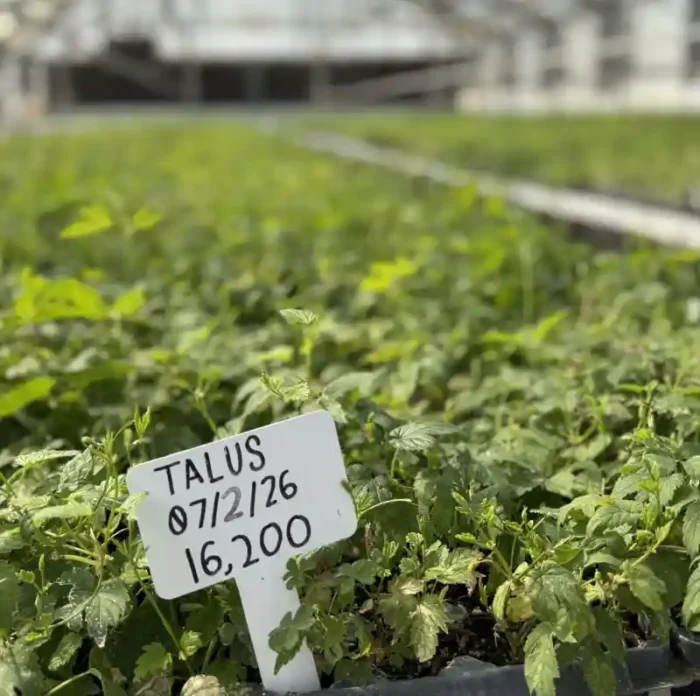
Brewers have historically struggled to substitute domestic hops into these styles without picking up an unwanted grassy or vegetal edge. Brewers and well-informed beer drinkers (that’s you) will tell you that HBC 1134 avoids that pitfall, delivering smooth, balanced bitterness instead.
If a hop is not agronomically viable, it will never make it beyond the experimental phase. HBC 1134 seems to have cleared that hurdle. Reportedly, it yields up to 1,800 more pounds per acre than Saaz, while holding up better against disease and storing well after harvest. For a Pacific Northwest hop industry looking to reduce its dependence on the uncertain future of European imports, that combination of authentic character and agronomic reliability is a big deal.
What Would You Name It?
It’s not just a lab curiosity. Today, there’s nothing experimental but the name. A beer brewed to showcase the new hop won a medal at the 2023 Washington Beer Awards. It was brewed at the Haas Innovations Brewery in Yakima. More recently, a beer brewed with HBC 1134 won a gold medal at the 2026 World Beer Cup: It’s A Me Mario, an Italian Pilsner brewed by Portland, Oregon’s Breakside Brewery. It’s already earned a permanent place in Bale Breaker Brewing’s Five Star Dive Bar, a light lager designed to provide a craft alternative to “Lite” beers. So yeah, HBC 1134 is out there, and I predict it will soon have a more memorable name.
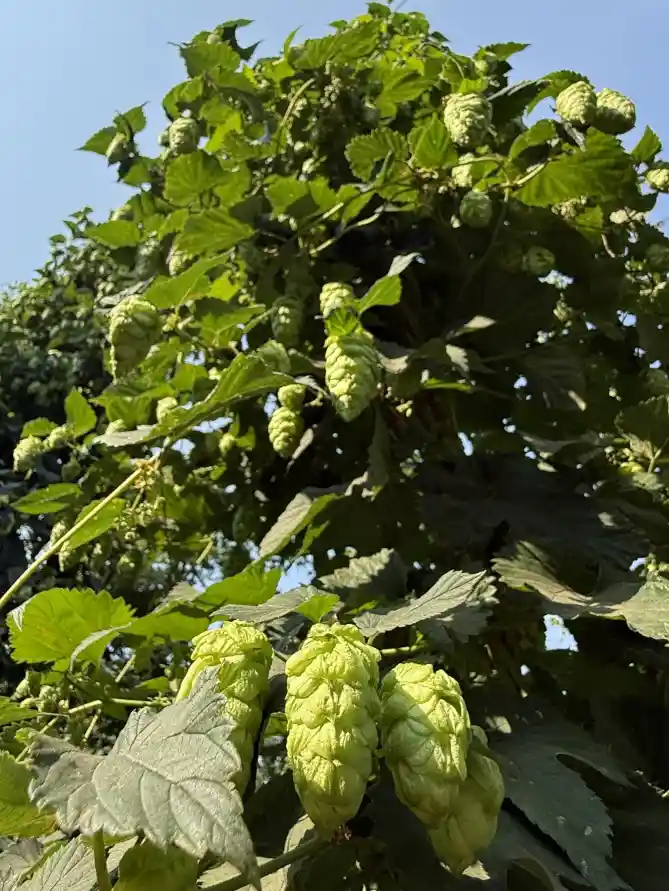
Another thing to file away in your noggin: HBC 1134 is still, technically, an experimental variety, and I’d treat some of the yield and performance figures floating around as early indicators rather than settled fact — this is a hop still working its way through trial plantings and limited commercial use, not one with years of data behind it. But if it lives up to the early buzz, it could be a meaningful piece of the puzzle for brewers trying to keep pilsners and lagers tasting the way they’re supposed to, using hops grown right here at home. Worth keeping an eye on next time you spot something new on a pilsner label.
Enquiring Minds Want to Know
I’ll close with this. If you are an inquisitive sort of person, you might be wondering why the hop farmers in Europe don’t just take care of their own problems. Below, I share some information about the differences between U.S. hop farming and European hop farming. That info might help you reach your own conclusions.
- Our average-sized hop farms are huge compared to those in Europe. The average size of a German hop farm, for instance, is less than 50 acres. The average size in the Pacific Northwest, where virtually all of the U.S. crop is grown, is around 670 acres. Many farms are much bigger than that.
- European hop farms are generally multi-generational, family-run operations. Die Mutter and der Vater, along with Oma and Opa, are out in the field doing the work. They’re small businesses that rely on private financing (family financing). Investing in innovation is not easy.
- U.S. hop farms, in general, are large businesses heavily financed by banks. Most are still family-owned, but they operate on a larger scale and are financed accordingly.
- Irrigation. The lion’s share of the annual U.S. hop crop comes from the Yakima Valley. It is a warm, dry climate that relies on a widespread irrigation infrastructure. That infrastructure has been in place for many decades. Irrigation was a prerequisite from day one.
- Lack of irrigation. Historically, European hop farmers did not need irrigation because of steady rainfall. When hop fields are stressed, they are more vulnerable to insect and disease damage. These are expensive and difficult problems to address. It’s not without high cost, but today, European farmers (of all kinds) are rapidly adopting irrigation to cope with the realities of climate change. However, they face strict water-allocation mandates, both locally and from the European Union.
- What will the future of irrigated hop farming look like in Europe? Nobody knows.