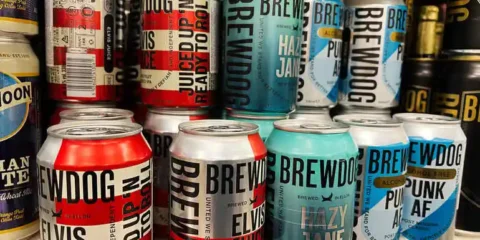
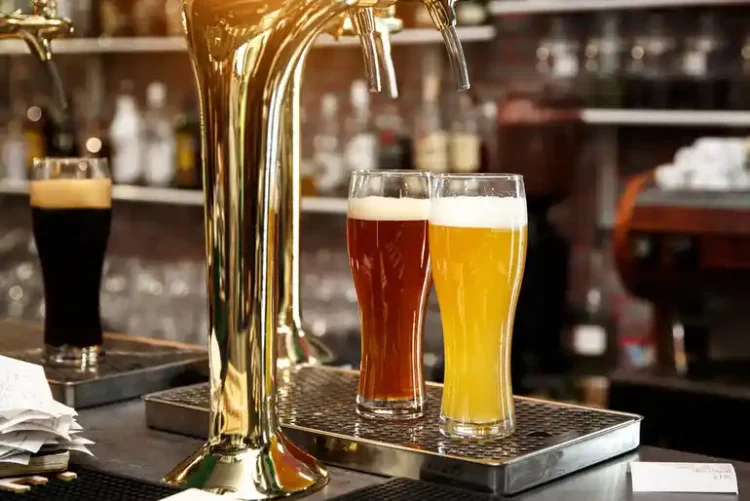
A sealed can of non-alcoholic beer and a keg may leave a brewery in equally good condition. Their paths then separate. The can is kept shut, whereas the draught beer passes through a coupler, tubing, and faucet, all of which contribute to the beer reaching the glass. Maintaining those lines and ensuring they are kept clean is vital for breweries and taprooms in order to ensure the desired taste and quality of the beer. For each connection, there is an additional variable. For that reason, the product mustn’t be alcoholic beer, since it’s gaining more and more space in taprooms. Reducing the alcohol content will alter the protective environment that is typically found in beer.
Alcohol Is One of Several Barriers
Many organisms are inhibited from growing by the alcohol content, low pH, hop compounds, and carbon dioxide of conventional beer types. These factors do not guarantee safety by themselves, but together they create several barriers to microbial growth. For people exploring alternatives for beer lovers, non-alcoholic beer removes one of those barriers. There are still risks related to the recipe, acidity, pasteurisation, and packaging hygiene, so these factors need careful attention.
In a challenge study conducted at Cornell University, Escherichia coli and Salmonella enterica survived and grew in some of the tested conditions in non-alcoholic beer, the Brewers Association reports. In addition to food-safety concerns of food pathogens, it may be spoilage bacteria that affect flavour. The findings highlight the importance of suitable sanitation, process control, and alcohol-free/low alcohol beer distribution in the brewing and storage process.
Similar Products Can Need Different Rules
Clear separation also matters in digital entertainment. At the pokies net casino Australia, a real-money pokie round requires the casino system to register a stake against an available cash balance. Demo credits cannot be withdrawn, even when the reels and symbols resemble the real-money game. NA beer may resemble a conventional lager or IPA, but both products cannot be assumed to tolerate identical handling.
A Sealed Package Has Fewer Variables
A brewery can stabilise packaged NA beer through a validated process such as pasteurisation. A sealed container offers limited opportunity for later contamination. A keg is more complicated. Distribution may expose it to unsuitable temperatures, while a long-draw system adds joints and tubing. Correct handling remains essential after packaging. Cold storage slows microbial growth but cannot correct earlier contamination.
A keg may pass through a distributor, warehouse, and delivery vehicle before reaching the taproom. As kegs redefine how non-alcoholic beverages are stored and served, each handoff should preserve the brewery’s specified temperature range. If that history is missing, appearance and aroma cannot establish that the product remained correctly handled. Before releasing NA beer in kegs, a brewery needs clear answers to several questions:
- Has the recipe received a microbial risk assessment?
- Is stabilisation validated for the product and package?
- What temperature must be maintained during storage and delivery?
- How long may the keg remain connected?
- Does the system require a dedicated line or cleaning schedule?
- Who records temperatures, cleaning dates, and corrective action?
“Keep cold” is not a complete control plan. Limits and responsibilities must be specific.
The Taproom Becomes the Final System
Draught beer gains a final processing system at the venue. In brewery taprooms, the coupler, line, faucet, and glass all influence the served product. The Brewers Association recommends caustic cleaning of ordinary draught lines at least every 14 days. Quarterly acid cleaning addresses beer stone and inorganic deposits. These practices do not automatically form a validated safety programme for every NA recipe. A direct-draw system contains less tubing than a long-draw installation.
An inadequately cooled section or poorly maintained faucet adds risk near the point of service. Dedicated equipment may also simplify accountability. It avoids repeatedly changing products on one line and makes the cleaning record easier to interpret. Even if a separate line is required should come from the brewery’s validated plan rather than a general assumption applied to every NA beer.
Records Matter More Than Appearance
Unexpected haze, sour aroma, or excessive foaming may reveal spoilage. Their absence does not prove safety because pathogens cannot reliably be identified by looking at or tasting a pint.
Taproom procedures should therefore rely on documented controls:
- Confirm delivery and storage temperatures.
- Date each keg when it is tapped.
- Follow the brewery’s specified service window.
- Record every line-cleaning cycle.
- Keep couplers and faucets clean.
- Remove beer when its temperature history is uncertain.
- Report unusual flavour or dispense behaviour.
Staff must know which line carries the NA product. Switching beverages without prescribed cleaning can undermine the programme.
Controls Must Match the Product
The Brewers Association’s assessment of non-alcohol beer on draught states that available evidence is insufficient to recommend one set of practices guaranteed to make every product safe during on-premise service. The organisation highlights transportation temperatures, keg storage and poorly maintained long-draw systems among the variables requiring attention. Controls must therefore reflect the individual recipe, acidity, stabilisation method, package and dispensing arrangement. A brewery should define the permitted temperature range and service period, while distributors and taprooms need procedures that preserve those limits after the keg leaves production.
Washington taprooms have good reasons to expand their non-alcoholic selection. Packaged beer remains simpler to control, while a keg provides the familiar experience of a fresh pour. Safe draught service depends on documented responsibilities across the brewery, distribution chain, and venue. Those responsibilities must be in place before connecting the tap handle so that the draught system can deliver the beer cleanly and consistently. For breweries and taprooms, this is a minor step that can remind them of the need to take care of the lines, sanitize, and properly serve their product.